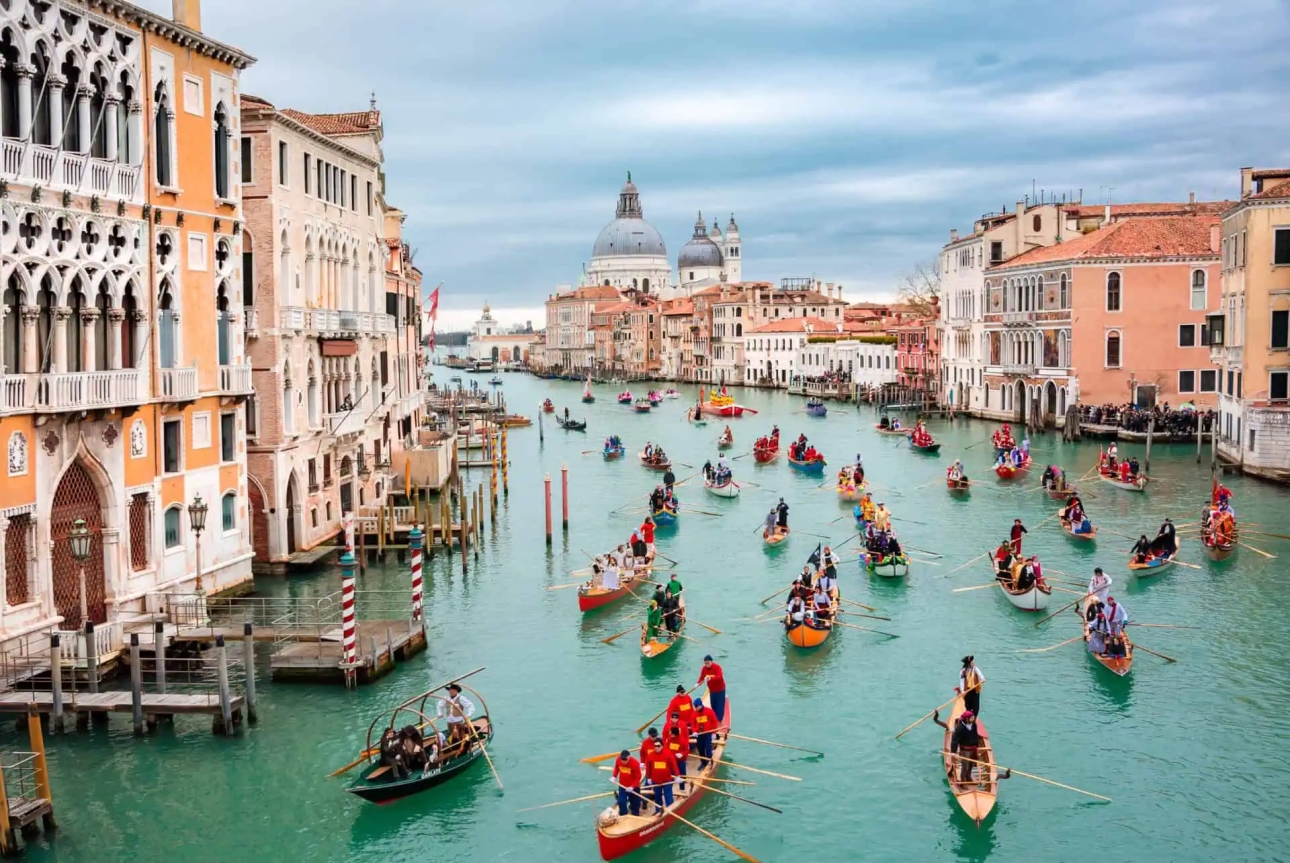
For centuries, Carnival in Venice has been far more than a celebration. It is a tradition deeply woven into the city’s identity, shaped by social order, political balance, and the singular spirit of the Venetian Republic.
As early as the 12th century, Venetians wore masks not only for festivities, but in everyday life. Merchants, nobles, courtesans, and politicians moved through the city without rank or reputation. For months each year, identity dissolved. What mattered was not who you were, but how you behaved.
This is what makes the Venetian Carnival so distinctive. It was never conceived as a spectacle for visitors. It was designed for Venetians themselves: a refined system of anonymity where elegance, excess, and transgression coexisted within precise (often unspoken) codes.
That duality remains at the heart of the Carnival today.
The season traditionally opens with the Volo dell’Angelo, the Flight of the Angel over Piazza San Marco. A moment of aerial theatre that has evolved over centuries, yet still captures the essence of Carnival: ritual and audacity, order and freedom, perfectly intertwined.
In Venice, identity has always been optional.
And perhaps, that is its most enduring luxury.
Masks: Beauty with a Purpose
Venetian masks were designed with a specific intention, and each one had a different function.
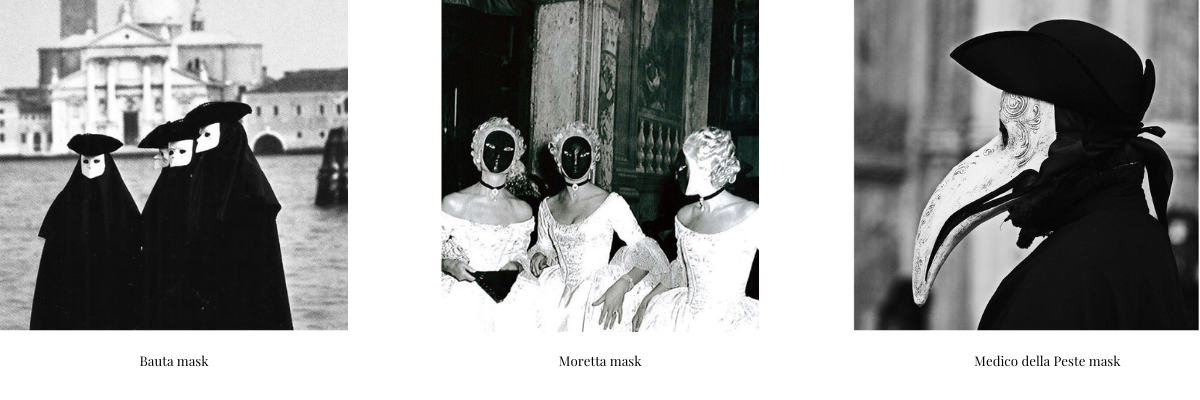
The Bauta, stark white with a protruding chin, allowed its wearer to eat, drink and speak without removing it, making it ideal for political and social exchange.
The Moretta, a small oval mask once worn by women and held in place by biting a button, imposed silence, turning mystery into an act of seduction.
The long-beaked Medico della Peste, now-famous plague doctor mask, originated as a practical tool during epidemics.
These masks transformed behaviour : protected by anonymity, Venetians dared more intellectually, emotionally, and socially.
Passing on the Tradition with the Londra Palace Venezia
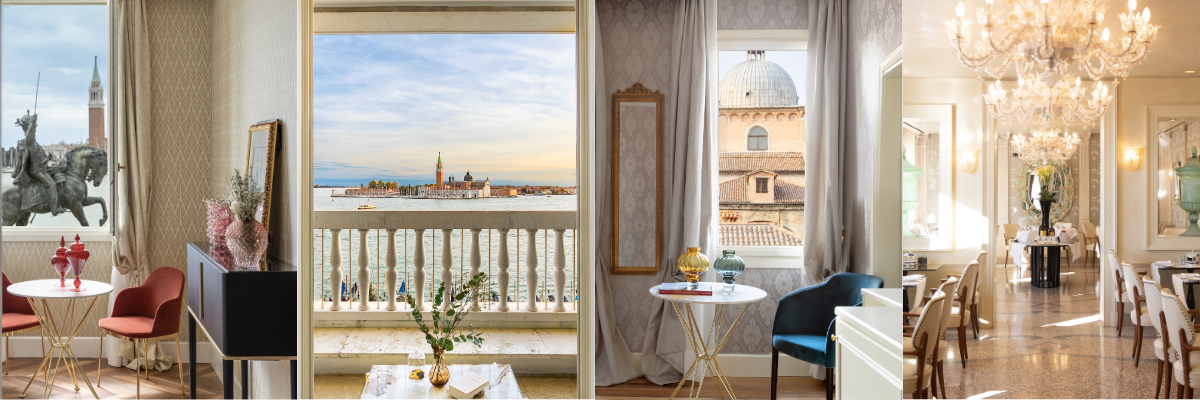
Londra Palace Venezia continues to embody the spirit of Venice by focusing on what truly matters: transmission.
Among the experiences offered by the hotel, one stands out for families: a Carnival mask-making workshop for children, guided by expert artisans from Venice’s most renowned ateliers.
There is a world of difference between the happiness of a child who receives a Carnival mask as a gift, and the quiet ecstasy of one who has created it with their own hands. Shaping papier-mâché, choosing colours, understanding symbols, discovering the patience and gestures behind each mask.
Parents are, of course, warmly invited to take part as well.
This is how Venetian traditions endure. Not through spectacle, but through experience.
Behind these moments stands the discreet excellence of Londra Palace Venezia’s Clefs d’Or concierges. Guardians of local knowledge, they connect guests with authentic artisans, meaningful encounters, and experiences rooted in the city’s cultural fabric.
At Londra Palace Venezia, Carnival is not something to consume.
It is something to understand, to make, and to pass on.